Table of Contents
Freezing Chestnuts – Can You Freeze Chestnuts?
Freezing chestnuts? Absolutely! These little autumn treasures can be wonderfully preserved for a longer period. When the autumn wind blows the first chestnuts from the trees, it's time to stock up.
In our experience, freezing chestnuts is a fantastic method to extend their shelf life without sacrificing taste or quality. Whether raw or pre-cooked, chestnuts can be excellently stored when frozen.
Freezing offers the opportunity to enjoy these nutritious nuts beyond their season. So, don't worry if you're inundated with chestnuts in autumn – freezing is the solution!
Tip: Our recommendation for the right freezer containers with glass lids for environmentally friendly freezing of your chestnuts:
No products found.
* Affiliate links / Image source: Amazon
How to Freeze Chestnuts
Freezing chestnuts is so simple that it would almost be a crime not to do it.
First, you should thoroughly wash and dry the chestnuts.
After that, you have two options: Either you freeze them raw or you cook them beforehand.
For freezing raw chestnuts, we recommend scoring them first to prevent them from bursting. Afterwards, you can portion the chestnuts into freezer bags and put them in the freezer!
If you want to freeze cooked chestnuts, first cook them until soft, let them cool, and then proceed as described.
Freezing in portions makes thawing easier later, as you can take out exactly the amount you need.
Tip: Our recommendation for the right freezer containers with plastic lids for your chestnuts:
No products found.
* Affiliate links / Image source: Amazon
Things to Consider When Freezing Chestnuts
When freezing chestnuts, there are a few things to keep in mind.
Firstly: Quality over quantity. Only fresh, undamaged chestnuts should make their way into your freezer.
Secondly: Air is the enemy. Try to remove as much air as possible from the freezer bags before sealing them. This prevents freezer burn and keeps your chestnuts fresh longer.
And thirdly: Label your bags with the freezing date. This way, you keep track and always know how long your chestnuts have been on ice.
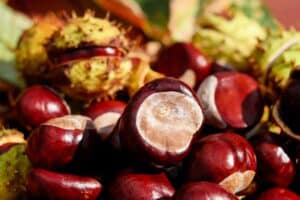
Freezing Cooked Chestnuts - How to Do It Right
Freezing cooked chestnuts is a clever move to enjoy their taste even out of season.
After cooking and completely cooling the chestnuts, portion them into suitable freezer containers or bags.
It is important that the cooked chestnuts are completely dry to avoid ice crystal formation.
Our tip: Place baking paper between the layers of chestnuts to prevent them from freezing together. This way, you can easily remove individual portions later without having to thaw the entire contents.
Freezing Bay Bolete - Important to Note
When freezing Bay Bolete (Maronen Röhrling), there is a special consideration: these mushrooms should be blanched before freezing. Briefly boiling them in salted water helps to deactivate enzymes that could otherwise impair taste and texture.
After blanching and carefully drying, pack the Bay Bolete airtight and freeze them.
Prepared this way, you can use the mushrooms for soups, sauces, or as a side dish whenever you feel like it.
Our FAVORITE freezer containers for every use:
No products found.
* Affiliate links / Image source: Amazon
Freezing Peeled Chestnuts - Guaranteed Success
Freezing peeled chestnuts is a real time-saver for future culinary creations. After peeling - which can be a test of patience - the chestnuts should be briefly blanched to clean the surface and kill any bacteria.
Then dry them well, portion them, and store them in airtight freezer bags.
A little trick: Flattened bags save space in the freezer and allow for faster thawing.
How Long Frozen Chestnuts Last with Proper Storage in the Freezer
As with most foods, the shelf life of frozen chestnuts depends on proper storage. At a constant temperature of -18°C or below, chestnuts can be stored in the freezer for up to a year without significant loss of quality.
Regular checking of the freezer and organized storage help to keep track and ensure that no chestnut is unnecessarily wasted.
Properly Thawing Frozen Chestnuts
Thawing frozen chestnuts is incredibly straightforward.
It's best to let them thaw slowly overnight in the refrigerator. This best preserves their texture and taste.
If you need the chestnuts faster, you can also let them thaw at room temperature. However, make sure not to expose them directly to a heat source, as this can lead to an uneven texture.
After thawing, the chestnuts are ready for your culinary adventures – whether as a side dish, in desserts, or as a savory snack.
Freezing Chestnut Puree - Step-by-Step Guide to Making Your Own
- Preparation of the Chestnuts:
- Thoroughly wash fresh chestnuts to remove dirt.
- Using a sharp knife, make an X incision on the rounded side of the chestnut. This helps with peeling later.
- Cooking the Chestnuts:
- Place the scored chestnuts in a pot of boiling water.
- Cook over medium heat for 20-30 minutes until soft.
- Drain the chestnuts and let them cool briefly until they are lukewarm.
- Peeling the Chestnuts:
- Peel the chestnuts while still warm. Remove both the hard outer shell and the thin inner skin.
- Preparation of the Puree:
- Place the peeled chestnuts in a bowl.
- Mash them with a potato masher or process in a blender until the desired consistency is achieved.
- Optional: Depending on taste, the puree can be refined with a little butter, cream, salt, and/or sugar.
- Cooling Down:
- Allow the finished chestnut puree to cool completely before freezing.
- Portioning:
- Divide the puree into freezer-safe containers or freezer bags in portion sizes. Make sure to leave some space for expansion during freezing.
- Labeling:
- Label the containers or bags with the contents and the date of preparation.
- Freezing:
- Place the portioned and labeled chestnut puree in the freezer compartment or freezer. It can be stored for up to 3 months.
- Thawing and Use:
- To thaw, let the chestnut puree thaw overnight in the refrigerator or warm it in the microwave on low power.
- After thawing, use the puree as a side dish, in soups, for desserts, or in other recipes.

This is Lukas. Lukas loves to write and cook. This is how he came into contact with the topic of freezing and thawing food. He shares his personal experiences on the topic of freezing food in the form of written articles and posts.

Freezing kohlrabi - how to do it right
March 16, 2026

Freezing green asparagus - here's how to do it correctly
March 13, 2026

Freezing cauliflower - how to do it right
March 12, 2026